In the grand architecture of American political history, presidencies are often remembered through the lens of crisis and triumph. Historians catalog wars ended, economies rebuilt, laws passed, and speeches that stirred nations into motion. The lives of presidents become monuments constructed from headlines, policy victories, and the weight of global expectations. Yet beyond the cameras and ceremonial grandeur of the White House lies another kind of history — quieter, deeply personal, and often far more enduring.
It is the history built in kitchens late at night after official dinners have ended. In whispered encouragement before difficult public appearances. In the ordinary rituals that protect a family from being consumed by extraordinary circumstances.
For Barack Obama and Michelle Obama, that quiet force was Marian Robinson.
Her passing in May 2024 at the age of 86 did not merely mark the loss of a beloved family matriarch. It represented the closing of a deeply important chapter in the Obama family story — one that Americans perhaps never fully understood while it was unfolding in front of them.
Marian Robinson occupied one of the strangest positions imaginable: she lived inside the White House without ever seeming changed by it.
When Barack Obama won the presidency in 2008, the moment transformed not only American politics but also the everyday lives of everyone closest to him. Suddenly, the Obama family became the focus of relentless public fascination. Every detail — from the girls’ school choices to Michelle Obama’s wardrobe — became national conversation.
Yet amid all that noise, Marian remained remarkably steady.
She moved from Chicago to Washington not for prestige or influence, but for one reason alone: her granddaughters.
While millions saw the White House as a symbol of power, Marian saw it as a home that two young girls would have to survive emotionally. She understood something many Americans overlooked at the time — that growing up under permanent public scrutiny could distort childhood itself.
So she became their shield.
Inside the residence at White House, Marian created routines that resisted the surreal nature of presidential life. While aides coordinated global diplomacy downstairs and world leaders crossed historic hallways, she focused on homework, bedtimes, breakfast, and emotional stability.
She was the quiet architect of normalcy.
Michelle Obama would later speak openly about how essential her mother became during those years. The presidency demanded impossible sacrifices from every member of the family. Barack Obama carried the burden of leading a nation through financial crisis, political polarization, wars, and historic expectations. Michelle balanced public advocacy with motherhood under microscopic scrutiny.
Marian gave them something priceless: trust.
They knew their daughters were being raised not by the machinery of politics, but by someone grounded in the same values that shaped their own lives long before Washington ever entered the picture.
That grounding mattered enormously.
Malia and Sasha Obama were not merely presidential children. They were also Black girls growing up in one of the most visible homes on Earth during a deeply polarized era in American history. Marian Robinson understood the emotional complexity of that experience better than perhaps anyone else around them.
She carried with her the wisdom of Chicago’s South Side — a world built on resilience, humility, discipline, and family loyalty. Those values entered the White House with her, softening an institution often criticized for isolating those who live inside it.
Unlike many figures orbiting political power, Marian never appeared interested in performance. She avoided interviews, rarely sought attention, and seemed almost amused by the spectacle surrounding her family. Staff members and observers often described her as calm, practical, and refreshingly unaffected by status.
That authenticity became part of her quiet influence.
At a time when political life increasingly resembled celebrity culture, Marian Robinson represented something increasingly rare: a person entirely comfortable existing outside public validation.
Perhaps that is why Americans connected with her so deeply.
She reminded people that behind even the most historic presidency stood familiar family dynamics recognizable in ordinary households across the country — grandparents helping raise children, mothers protecting daughters, families leaning on one another during overwhelming moments.
The symbolism mattered too.
For many Black Americans, Marian Robinson embodied an entire generation of women whose sacrifices often went unrecognized publicly but shaped the futures of their families in immeasurable ways. Women who carried stability through eras marked by discrimination, economic struggle, and social upheaval. Women whose strength rarely announced itself loudly, but whose presence held entire households together.
In many ways, Marian’s role in the Obama presidency reflected that broader cultural truth.
She was not elected.
She delivered no speeches.
She signed no legislation.
Yet her contribution to that era of American life was profound precisely because it happened privately.
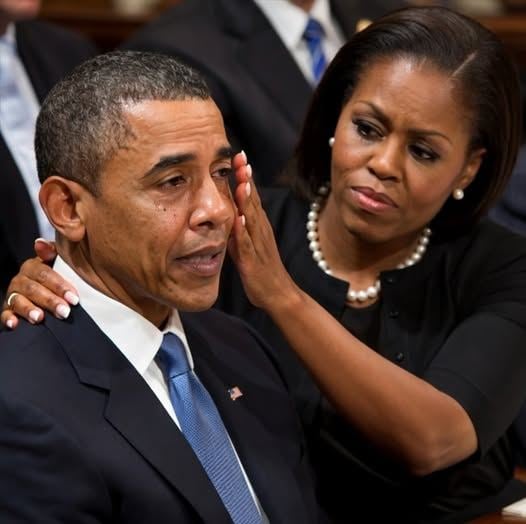
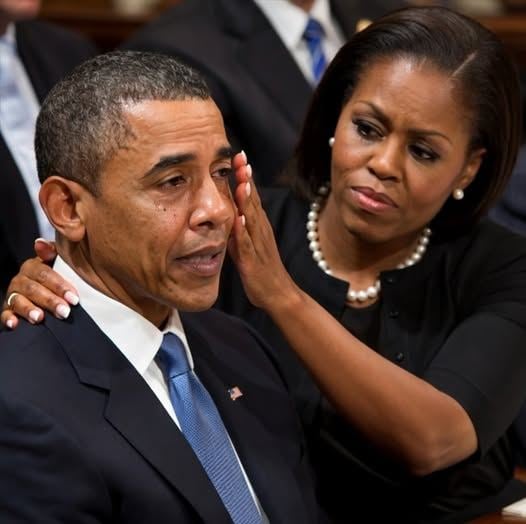
When news of her passing emerged, tributes poured in not simply because she was connected to a former president, but because people sensed something genuine in her story. Barack Obama described her as “our rock,” while Michelle Obama spoke emotionally about the security and unconditional love her mother provided throughout every stage of life.
Their grief resonated because it felt universal.
Beneath the political symbolism, beneath the historical significance, was something every family understands eventually: the pain of losing the person who quietly held everyone together.
And perhaps that is Marian Robinson’s most enduring legacy.
In a building designed to project strength to the world, she reminded those inside it that real strength is often softer, quieter, and less visible. It exists in consistency. In sacrifice. In showing up every day for the people you love without demanding recognition in return.
Long after the speeches fade and administrations become chapters in history books, those quieter forms of love are often what endure the longest.
For the Obama family, Marian Robinson was not simply part of the White House years.
She was the reason those years still felt like home.